Project introduction
The first vestige
Meet the idea behind VESTIGE, the three places guiding its development, the installation plans for Windows and Linux, and where the project stands now.
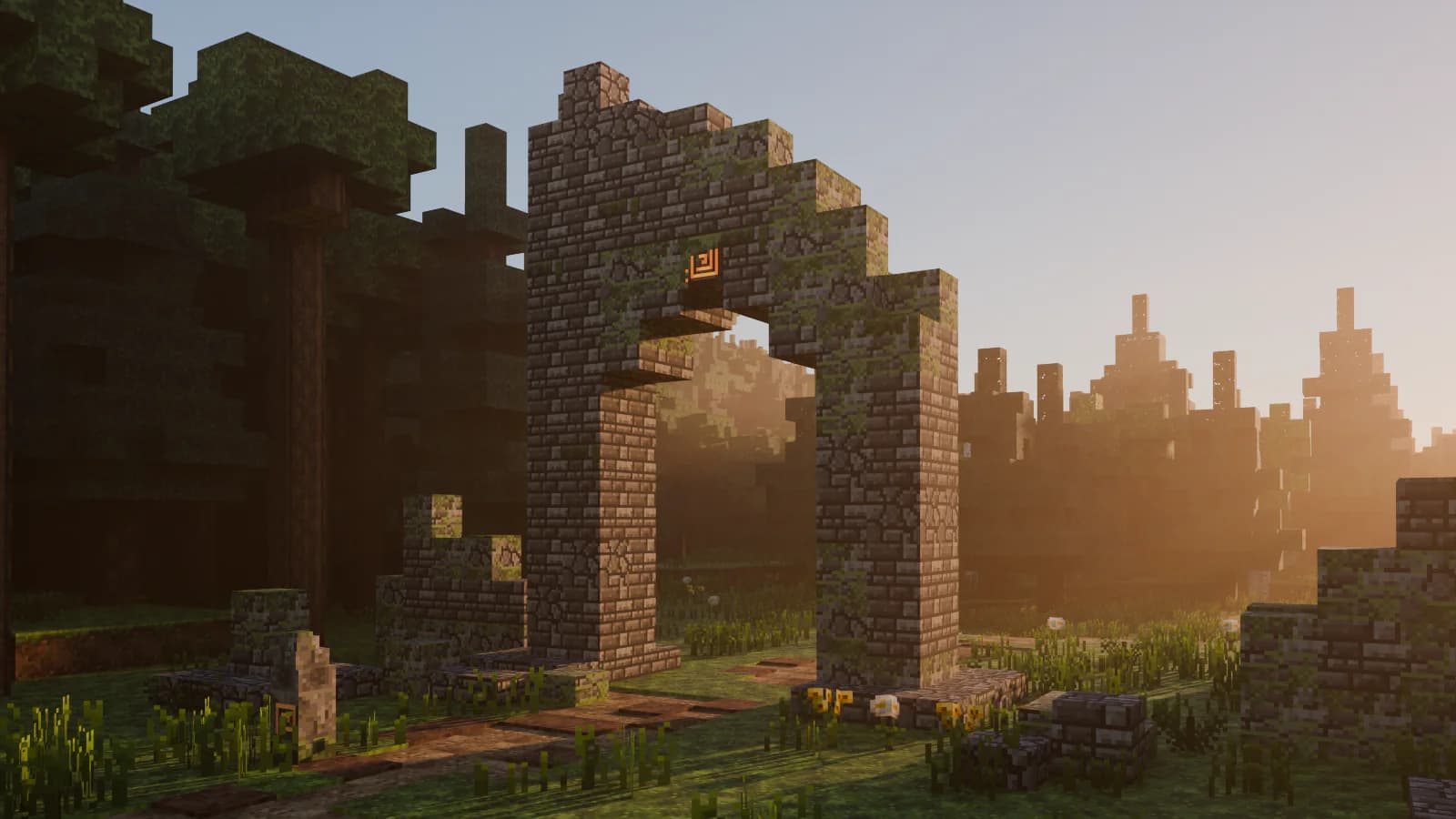 Concept art
A vestige is what remains after something has passed: a worn step, a mark on a stone, a trail that still shows in the grass long after the last walk. VESTIGE is an exploration and survival mod for Minecraft: Java Edition, built around that idea. It’s in development, and this is the first piece we’re publishing about it.
We’re starting with a website, not a download, so this isn’t a release announcement. Think of it as a first journal entry: what VESTIGE is meant to be, how it should reach you, and where things stand right now.
A world that remembers you
Every Minecraft world is full of places you pass through once and never think about again. VESTIGE starts from a simple question: what if some of those places held on to what you did there?
We call this idea regional memory. A place keeps a few meaningful moments from your journey: that you explored it, helped the people who live there, came back again and again, or made camp there. Later, that memory becomes the reason for something new: an encounter, a discovery, or a change you notice only because you were there before.
It’s also worth saying what this memory isn’t. VESTIGE isn’t designed to record everything you do, count the blocks you break, or simulate the whole world while you’re away. It relies on selected moments and the places they belong to. Mining and building stay the way you know them. The idea isn’t to punish anyone, but to make familiar places worth coming back to.
Three places to begin with
Three examples are shaping the first ideas, and you’ll find them throughout this site.
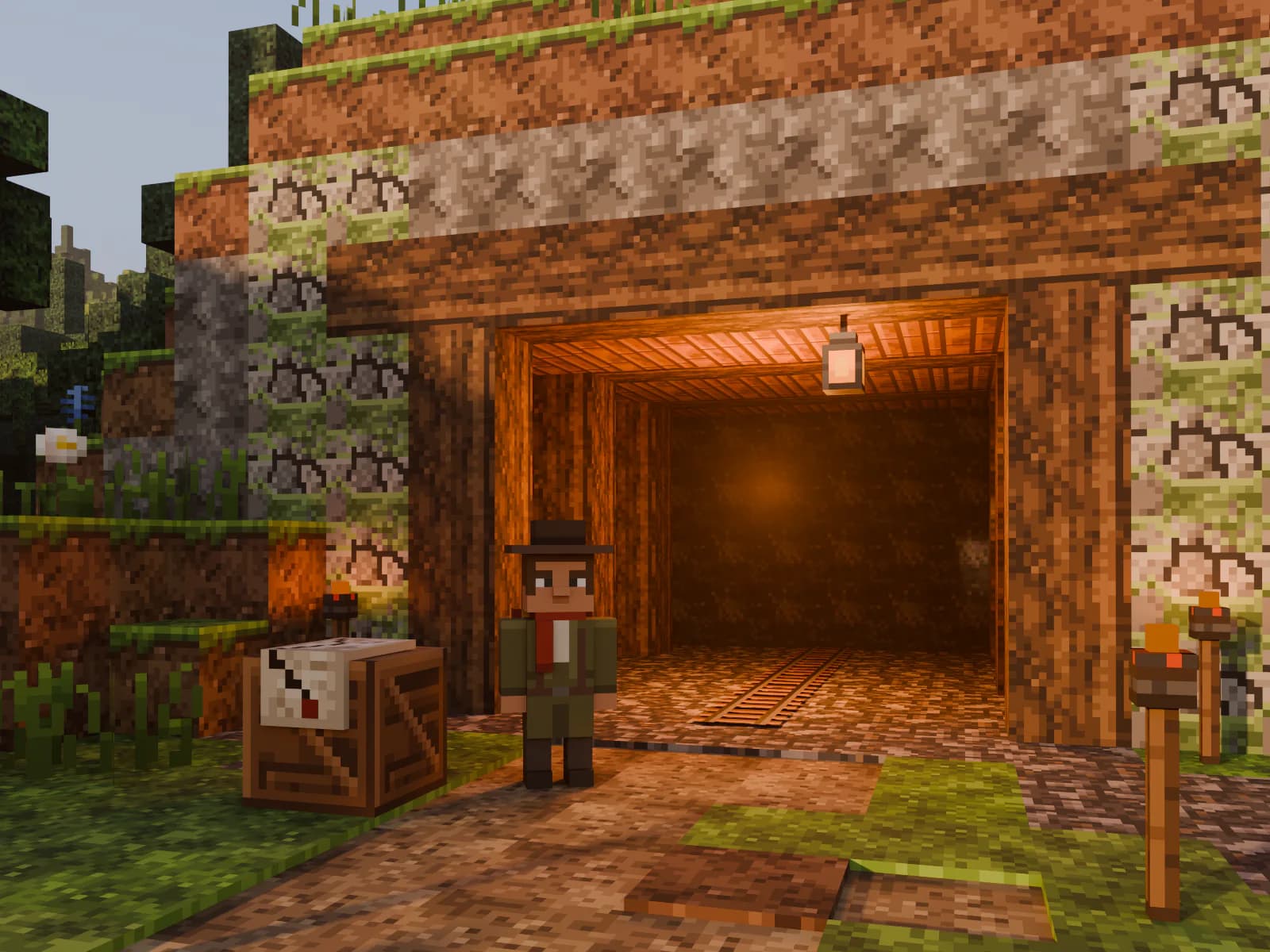
The mine. Expedition after expedition, you follow the same path from the forest to an old mine, and your torches mark the trail. An explorer notices your trail and follows it. At the mine entrance, they leave a proposal for an expedition: a route toward a hidden chamber.
The village. The well at the center of a village has collapsed, and you rebuild it stone by stone before moving on. Some time later, a local trader returns to the village with a new trade route and a request for you.
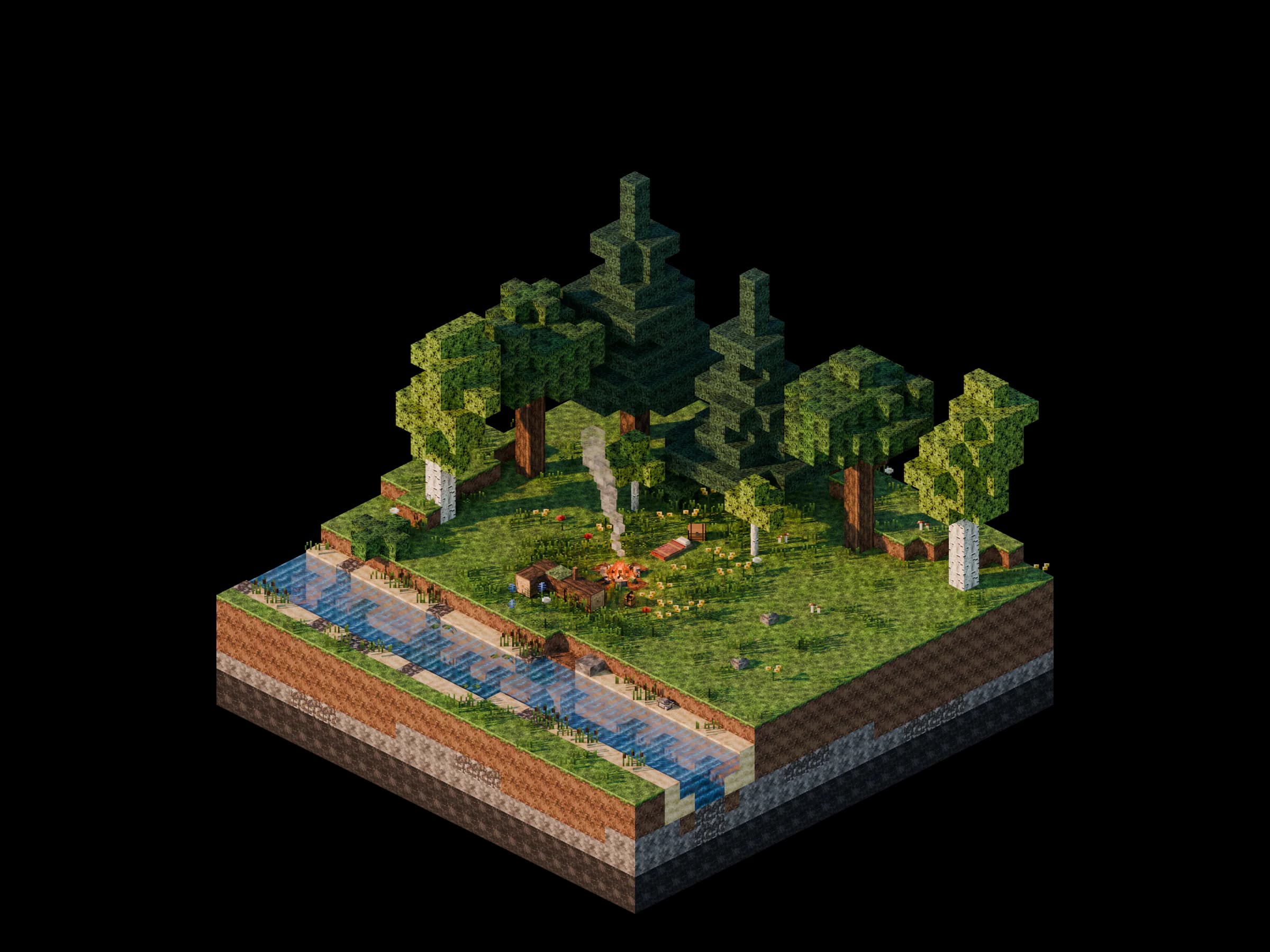
The camp. You set up camp in a riverside clearing: a campfire, a bed, and a chest. In the morning, you put out the fire and move on. When you return, tall grass and flowers have grown around the camp, and the campfire is lit again: a traveler has passed through.
Each example connects something you did with something you find later. On the homepage, an illustrated demonstration lets you compare the two moments for each place. It’s a scripted example of the planned mechanics, not a screenshot of the game.
A journal for what the world remembers
Each remembered moment is meant to get an entry in the Vestige Journal, which links a place to what happened there and what came after. Here’s the first example entry:
Example entry
The old mine trail
- Place
- Mine entrance.
- Event
- Several expeditions along the same path.
- Vestige
- An explorer followed the trail and left a proposal for an expedition.
The idea is for it to read like an explorer’s notebook, not a table of statistics, and to give you a good reason to open the map and head back out.
Ruins, inscriptions, and relics are also part of the vision, connecting exploration to the history of specific places. That part is still taking shape.
How VESTIGE will reach you
VESTIGE is being prepared for Minecraft: Java Edition on Windows and Linux, in two forms.
The automatic installer is the simplest route. You download the installer for your system, run the setup wizard on your computer, and follow the instructions. It handles the VESTIGE files, so you don’t need to copy the .jar by hand.
The .jar file is for players who manage their own Minecraft instance and prefer to add mods themselves: you place the .jar in the mods folder of a compatible instance and start the matching profile.
Either way, you play with your own copy of Minecraft: Java Edition. Neither option is available yet. The Minecraft version, mod loader, and Java version required will be announced with the mod’s first release, along with the details of each file.
We’re also working to make VESTIGE available on Modrinth and CurseForge. For now, publication on these platforms is in preparation, and links to the project pages will appear on this site once those pages exist.
Where the project stands now
Today, VESTIGE is a direction, not a finished mod. The first focus is deliberately small: regional memory; the three events at the mine, the village, and the camp; one encounter tied to each; and a journal that’s genuinely useful. It’s a starting point, not a dated promise.
To be clear:
Already defined: the core idea, the three examples guiding development, the target operating systems (Windows and Linux), the two ways to install, and the intended edition (Minecraft: Java Edition).
Still in preparation: a published release, the download files, detailed compatibility, and publication on Modrinth and CurseForge.
What you can see today is this website. Its images are concept art, and the homepage demonstration shows where the mod is headed, not what it already does. When there’s a playable build, a file, or a date to share, you’ll find it here, on the news page.
This piece is the project’s first vestige. The next ones will appear here as VESTIGE takes shape.